CIRCLEWORK

Loading…
Loading…
Circlewalking (or walking in circles) is a slow, mindful movement practice that combines awareness, balance, and flow. Unlike ordinary walking, where we move in straight lines, circlewalking involves constant gentle turning, which requires continuous micro-adjustments of posture, coordination, and awareness.
Practiced in traditions such as Bagua Zhang and qi gong, it is used to harmonize the body’s energy, develop focus, and improve physical and cognitive health.
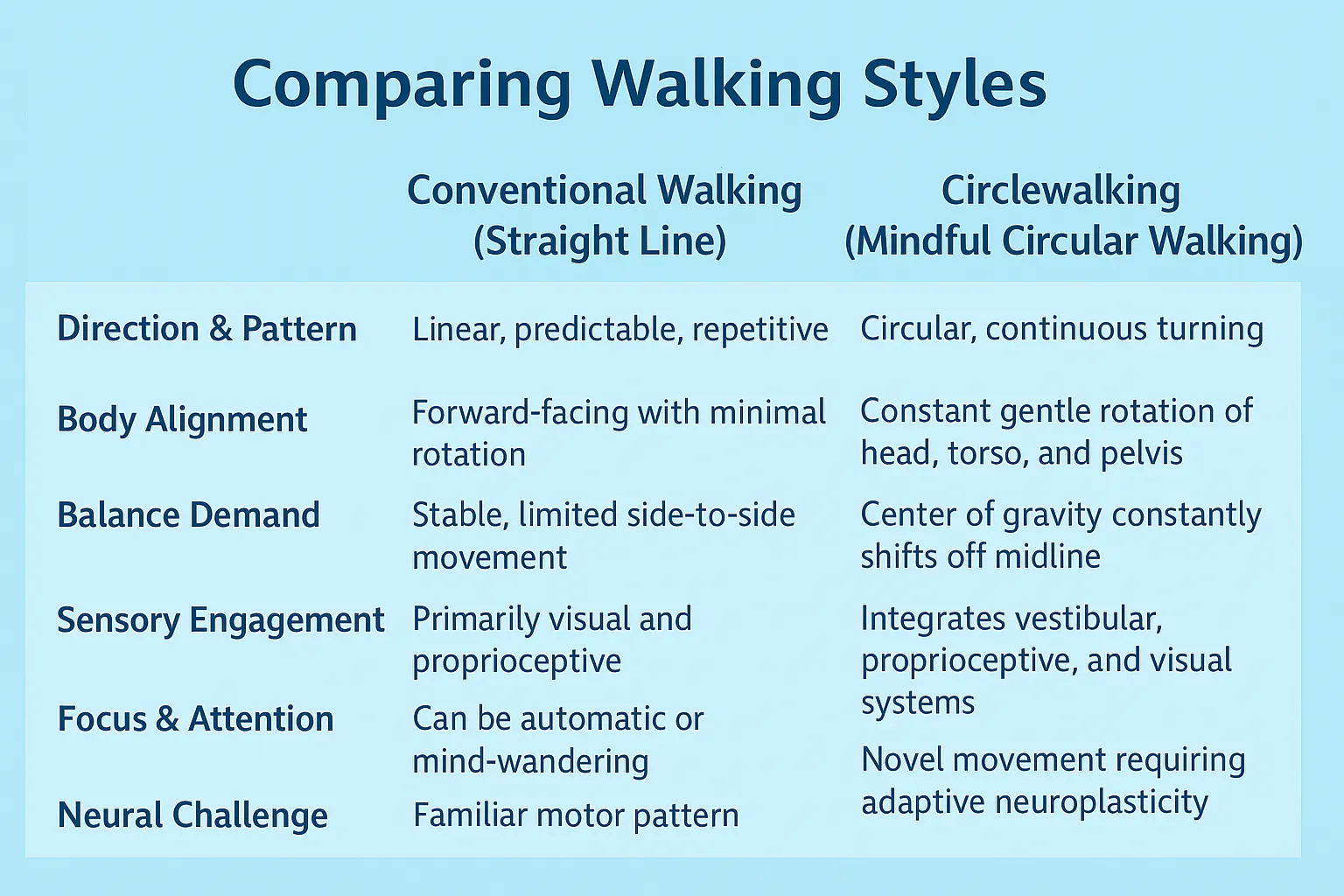
How Circlewalking Improves Balance
Summary Metaphor:
The path of a circle challenges your equilibrium — when you navigate it mindfully, your balance is strengthened.
How Circlewalking Improves Mental Acuity
Summary Metaphor:
Just as a compass resets when it’s moved in a circle, your mind reorients and refreshes when you walk one.
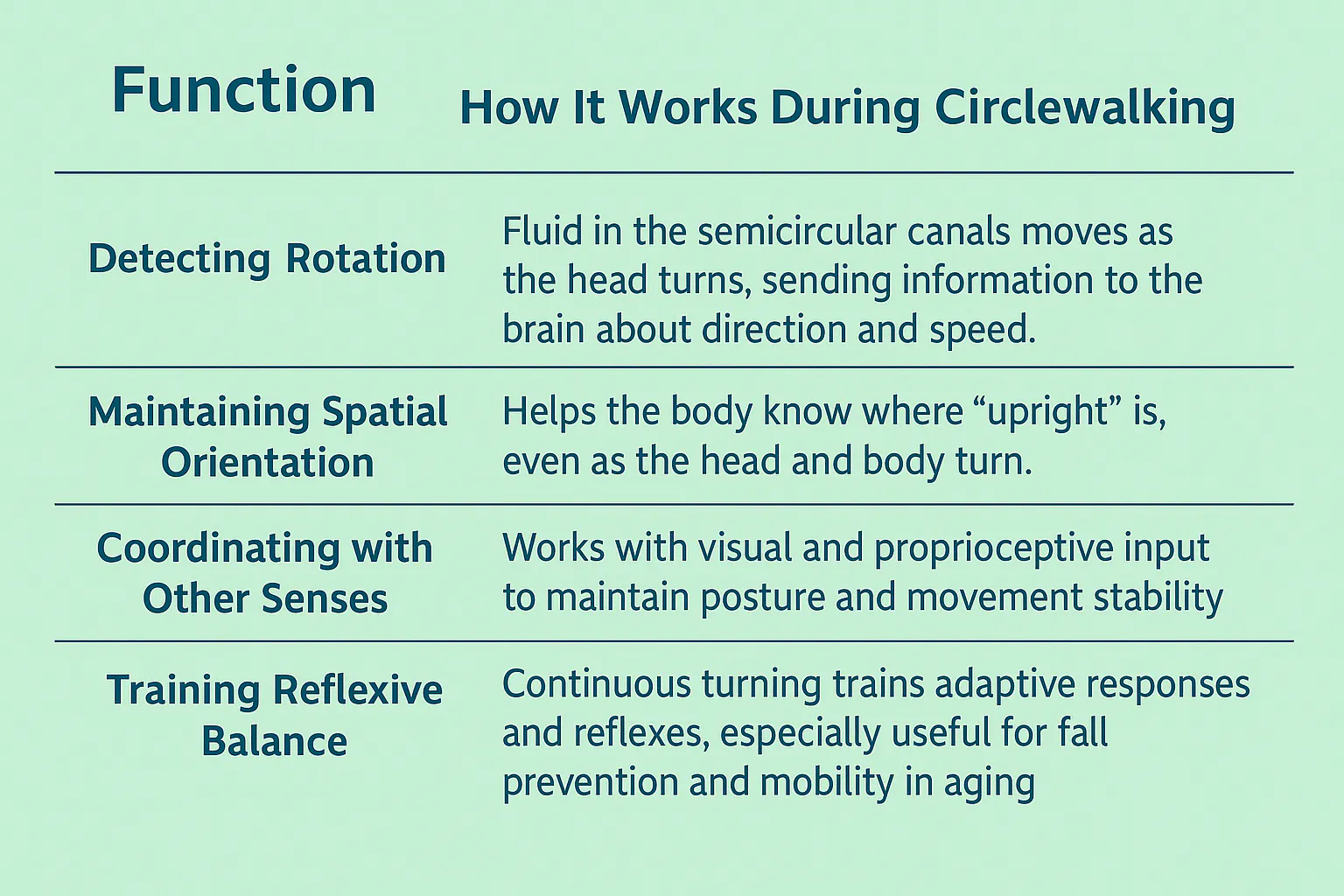
The vestibular system, located in the inner ear, detects motion, head position, and orientation.
It supports balance and spatial awareness by:
Summary
Circlewalking is a mindful, integrative movement practice that harmonizes physical stability, sensory coordination, and mental focus.
It strengthens balance through dynamic turning, sharpens the mind through novel movement, and fosters whole-body awareness through the continuous dialogue between the vestibular, visual, and proprioceptive systems.
Walking circles, practiced slowly and with awareness, is both ancient and practical — a moving meditation that refreshes both mind and body.